Key control
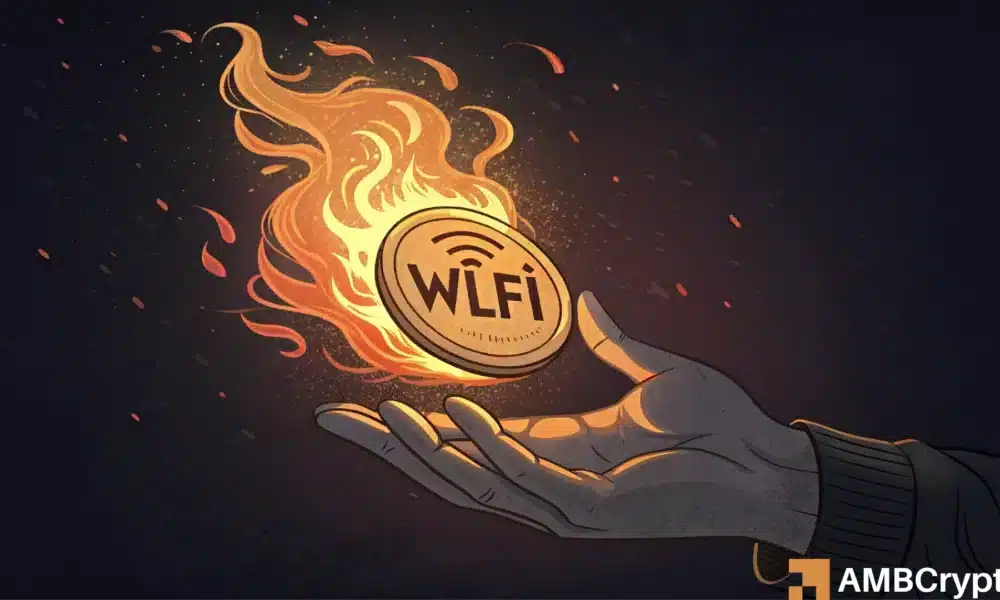
The WLFI Burn configuration takes commercial pol tariffs and recycling them in repurchases and burns. Could this float more tight be the anchor that the long -term holders need?
World Liberty Financial [WLFI] The launch was a volatility peak of the textbook.
The Token started 130% to $ 0.48 just from the door, just to sell almost 50% shortly after. It marked a classic “bomb and neglected” action driven by Fomo, sending some early LTH operating for the outputs.
Now the developers are digging. They have floated a Wlfi Burn proposal to tighten the float and reduce the circulating supply. The big question is whether this supply squeeze will be enough to stop bleeding.
Convert rates into value
WLFI’s burns proposal relies on a classic supply play book.
The first day he unlocked 24.6 billion tokens, with another 75.4 billion still waiting on the wings. However, with that type of float and the action of the choppy price we have seen, a squeeze in the future feels baked.
The solution of developers? A rate feedback cycle. Since WLFI is quoted in Ethereum, Solana and BSC, the protocol collects rates in those chains, buy WLFI out of the market and set it on a burning wallet.

Source: Dune
Here is why that matters: WLFI’s volume increased to $ 128 million.
Now, that does not mean burning $ 128 million in WLFI. On the other hand, the commercial rates of the liquidity owned by the protocol (poly) flow to the burn, such as Uniswap (Ethereum), Raydium (Solana) or Pancakeswap (BSC).
For example, if rates averaged 0.3% per operation, $ 128 million in volume could generate around $ 384,000 in rates. All that amount, under the proposal, would be recycled in WLFI repurchases and burn, cutting the supply.
WLFI Burn designed to strengthen the commitment
Wlfi’s burns proposal is built to realine the supply around the LTH.
Nothing highlights the weight of the LTHS more than Justin Sun. The founder of Tron unlocked 20% of his WLFI battery worth almost $ 200 million, while his total stock market records $ 891.2 million.
That type of whale footprint makes LTH’s behavior a key variable in WLFI’s supply dynamics. With the support of this, in Ethereum, the concentration of the support is out of the lists. The 100 main wallets eat 98.23% of the WLFI supply.

Source: Eserscan
In practice, that means that the price action is very governed by whales.
In that context, WLFI burned proposal is formed as a key strategic lever. The net effect? When stacking the pressure every time the volumes rotate higher, it maintains the commitment of LTH anchored.
Of course, it is too early to call this the end of Wlfi’s bleeding. However, what he points out is that developers double in a strategy. When configuring the WLFI burns mechanism, they are effectively buying the most track project.