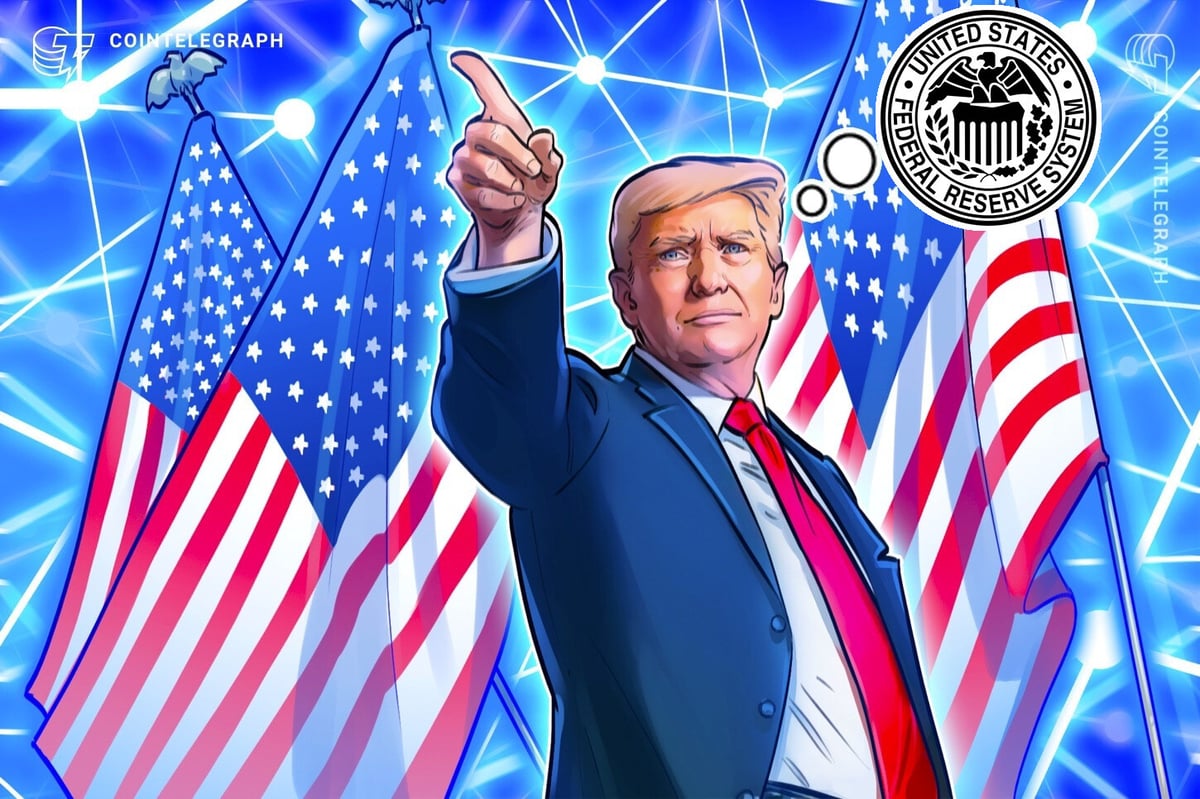
The US Department of Justice, under the direction of President Donald Trump, opened a criminal investigation against Federal Reserve Chairman Jerome Powell.
The Justice Department alleges that the president has misallocated funds during renovations to the Federal Reserve office buildings, a claim Powell has denied.
The Federal Reserve chairman said the allegations were politically motivated and “a consequence of the Federal Reserve setting interest rates based on our best assessment of what will benefit the public, rather than following the President’s preferences.”
Trump had previously toured office buildings under renovation, alleging that the Federal Reserve, under Powell, had allegedly gone over budget.
Trump has long sought to exert more control over the Federal Reserve and has expressed frustration over what he sees as insufficiently low interest rates.
Video message from Federal Reserve Chairman Jerome H. Powell: https://t.co/5dfrkByGyX pic.twitter.com/O4ecNaYaGH
— Federal Reserve (@federalreserve) January 12, 2026
Coinbase suspends trust services for Argentines
Coinbase, the major American cryptocurrency exchange, stopped fiat operations in Argentina just a year after entering the country’s market.
The exchange reportedly stopped services based on Argentine pesos following a review of its operations. It said the “deliberate pause” will give it time to assess the sustainability of its product offering in the region.
Argentine users will not be able to buy or sell USDC (USDC) with pesos or withdraw funds to local bank accounts at the end of January.
LATAM crypto industry observer Ana Gabriela Ojeda said these pauses usually occur when working in the local currency is too complex. “It is not a signal against cryptocurrencies or stablecoins, but rather a demonstration of the structural challenges of integrating local financial systems in volatile markets.”
NFT Paris canceled after market crash
The organizers of NFT Paris, an event focused on non-fungible tokens (NFTs) and real-world assets, canceled the conference, citing market conditions.
NFT Paris was initially scheduled for February, but organizers stated that “the market collapse hit us hard. Despite drastic cost cuts and months of trying to make it work, we couldn’t make it happen this year.”
After reaching an all-time high in 2022, NFTs have struggled to make a significant comeback. According to data from CoinGecko, the total NFT market capitalization is just over $3 billion at the time of publication, with a 24-hour trading volume of just $4 million.
Attendees of NFT Paris will have their tickets refunded. They did not comment on whether the event would be rescheduled or whether they would host future events.
US state of Wyoming launches its own stablecoin
Wyoming’s Frontier Stable Token (FRNT) is now available to the general public. State lawmakers framed the asset as a step forward for financial innovation in the state, which has boasted lax regulations for the digital asset industry.

The token, which is now active on the Solana blockchain, can be purchased on Kraken and linked to Arbitrum, Avalanche, Base, Ethereum, Optimism, and Polygon.
Other US states have shown interest in launching stablecoins. In October 2025, the Bank of North Dakota announced plans to release a “Roughrider” coin.
Proponents of state stablecoins have cited their stability (backing is typically secured by dollar reserves and U.S. Treasuries) and lower fees for transfers compared to traditional credit cards.
Financial influencers receive warnings from Italian regulators
The Commissione Nazionale per le Società e la Borsa (CONSOB), Italy’s main securities regulator, has warned influencers about their responsibilities in promoting financial products.
Citing guidelines from EU law, CONSOB warned “fin-fluencers” that “promoting a financial product or service is not like promoting shoes or watches.”
Promoting volatile assets like cryptocurrencies, where investors can lose all their capital, can make influencers legally responsible for what they post, CONSOB said.
According to the guidelines of the European Securities and Markets Authority (ESMA), even disclaimers such as “this is not financial advice” do not exempt influencers from legal obligations.

Moldova to align crypto rules with EU MiCA
On January 16, Moldova’s Finance Minister Andrian Gavrilita announced that his country would align its cryptocurrency laws with the European Union’s Cryptoasset Markets Regulation (MiCA) framework.
In an interview with local media, he said his ministry is collaborating with EU regulators to develop a legal framework that allows citizens to own and trade cryptocurrencies. The new laws will reportedly be a joint effort between the Ministry of Finance and the National Bank of Moldova, as well as security and anti-money laundering authorities.
Fundamentally, the new law would not recognize cryptocurrencies as a means of payment. Moldova’s central bank has warned about the risks associated with cryptocurrencies on multiple occasions, and Gavrilita himself has called cryptocurrencies a speculative instrument.
“I see [crypto] “More like a speculative domain, but citizens have the right to operate them in any way, and this year we will have the legislation.”
Magazine: Here’s why cryptocurrencies are moving to Dubai and Abu Dhabi
Cointelegraph Features and Cointelegraph Magazine publish long-form journalism, analysis and narrative reporting produced by Cointelegraph’s internal editorial team and selected external contributors with subject matter expertise. All articles are edited and reviewed by Cointelegraph editors in accordance with our editorial standards. Contributions from external writers are commissioned for their experience, research or perspective and do not reflect the views of Cointelegraph as a company unless explicitly stated. The content published on Features and Magazine does not constitute financial, legal or investment advice. Readers should conduct their own research and consult qualified professionals where appropriate. Cointelegraph maintains complete editorial independence. The selection, commissioning and publication of the content of Features and Magazines are not influenced by advertisers, partners or commercial relationships.