
The following is a guest post and an opinion of Eslavo Baranov, CEO in Ston.FI Plug.
From the phenomenon of games to financial ambition
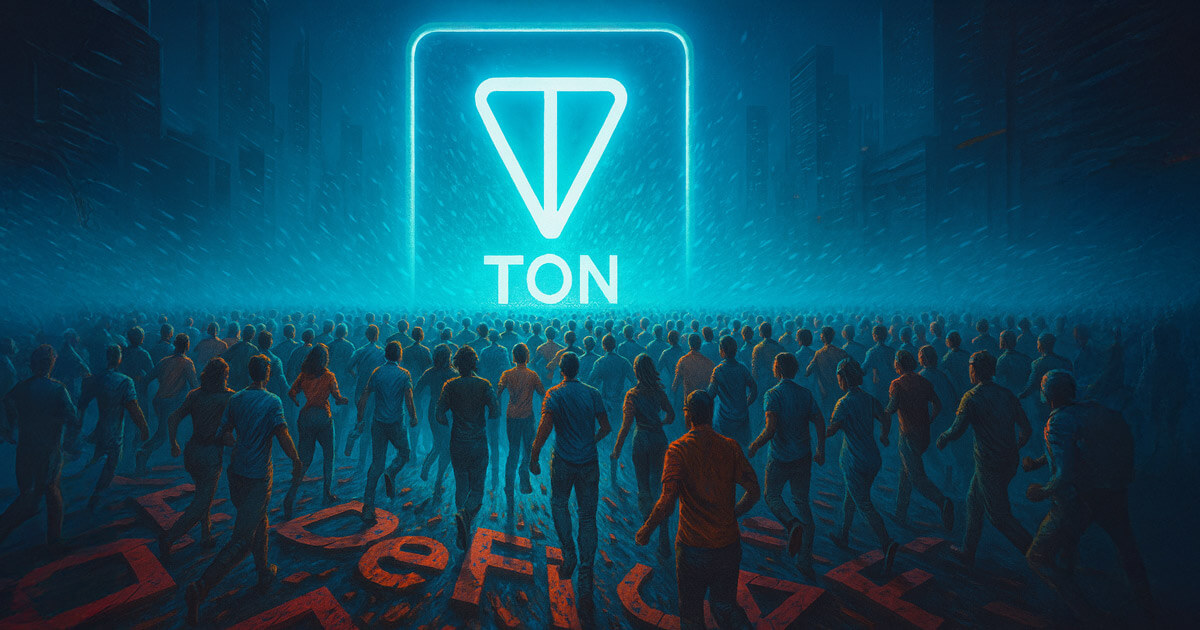
In 2024, the Ton Blockchain became one of the most commented ecosystems in cryptography, not by an innovative defi protocol, but thanks to the meteoric ascent of the Tap-To-Tarn Viral Games on Telegram. Titles such as Hamster Kombat and Notcoin attracted millions practically during the night, carrying daily active wallets to almost 2 million for September.

The surge demonstrated that Ton can aboard users at a pace that few blockchains can coincide. But he also exposed the fragility of the adoption driven by exaggerations: many players came to quick rewards and left when the incentives ended. The speculative capital – fluid and opportunistic by nature – followed the same path.
The games showed the scope of Ton. But they were never destined to be the basis of a financial revolution.
The lasting impact of the hype cycle
The cooling after the game was not a collapse; It was a restart. In January 2024, before the rise of the games, Ton averaged 26,000 daily active wallets. After the dust was established, the activity stabilized at 100,000–200,000, a multiple of its base prior to the hypo.
Even more important, the developer and user inputs sowed growth throughout the ecosystem. The number of DEFI protocols in Ton increased from 35 to 67 in 2024, an increase of 91%. This expansion reflects a gradual change in the approach to short -term promotions to lasting financial infrastructure.
Building Ton’s Defi Landscape
Ton’s Defi sector now encompasses tokens exchanges, bets and loans. In early 2024, Evaa was launched as the first loan protocol. At the end of summer, the AMM Ston.FI protocol had reached almost $ 400 million in liquidity. Today, leaders by total blocked value (TVL) are the Liquid Postators Protocol and the Ston.FI exchange protocol, which reflects the user’s preference for high liquidity central services.
Promoted by the emotion related to the game, the total locked value (TVL) throughout the network reached a maximum of $ 1.1 billion in July 2024. But as the incentive programs finished, TVL decreased to around $ 600 million to early 2025 and is now about $ 400 million.

These movements suggest that part of Ton’s liquidity was influenced by short -term market dynamics. The funds tended to flow during periods of attractive yields and gradually decrease as those opportunities decreased.
At the end of 2024, Ton had almost 38 million directions, however, the new creation of wallets fell sharply: from 724,000 daily in autumn to only 33,000 in early 2025. Meanwhile, it emerged as a safe shelter: around 790 million tons are currently currently states, concentrating liquidity for low -risk level protocols.
Why the revolution has not yet happened
Compared to Ethereum or Solana, the depth of liquidity and the range of products are still developing. Part of this difference comes from its underlying design. Ton’s architecture was created with a massive scalability in mind, which leads to a technically elegant but more complex infrastructure for developers.
Smart contracts in tons use low -level language, and many central components require construction from scratch, which may have contributed to a more gradual defi development rate in their early years.

Compensation? Low level development can produce more efficient and time -resistant solutions. Ton’s central equipment is actively reducing friction for builders, racing the way for faster growth.
Another factor is the dependence of the telegram ecosystem. On the one hand, this integration provides direct access to more than one billion users and tangible utility; Since 2024, Telegram channel owners have been able to receive advertising income payments in tons. On the other hand, create a single exposure point: any interruption in the telegram instantly impacts.
For now, many average users still see Telegram Mini-Apps as casual games instead of financial tools. Without expanding beyond the cases of entertainment use, the appeal of Ton to institutional capital remains limited.
Unlock the potential defi of ton
The way forward is clear: expanding beyond the bomb cycles and delivering financial market services integrated without problems in the telegram experience.
This could mean:
- Frictionless payments – Send cryptography in a telegram chat as easily as a text message.
- Daily utility -Pagar for goods, services or restaurant invoices in tons based.
- Accessible loans: offering microlyens and credit solutions in regions unattended by banks.
If they run well, these use cases could transform ton of a viral game phenomenon into a primary interface for global cryptography adoption.
Institutional trust signals
Institutional investment is already validating Ton’s potential. In March 2024, the main players that include Capital Sequoia, Draper Associates, Kingsway, Coinfund, Ribbit and Skybridge invested in Toncoin.
In January 2025, Zodia custody (a Standard Chartered subsidiary) announced the support for the Token Jetton standard of Ton, allowing banks and large investors to maintain and administer Ton’s assets safely. And in July 2025, the open platform, a protocols and telegrams -based applications developer built in TON, obtained $ 28.5 million at an assessment of $ 1 billion of the main Ribbit capital and capital panther funds.
Conclusion: from potential to reality
The explosive growth of 2024 showed that the scope of Telegram with Blockchain capabilities can move the markets. But the true transformation will come only when Ton evolves from an exaggerated pump ramp to a robust financial ecosystem.
The fundamentals are in place: a growing developer base, improvement of infrastructure and an unprecedented distribution through telegram. If the Defi de Ton sector can simplify the user experience and offer essential and defendant services where users will no longer participate in the future of digital finances, it could help define it.