
The Ethereum on-chain lending ecosystem has reached a new milestone: active loans surpassed $28 billion in January 2026.
Central to this growth is Aave, the leading Ethereum-based lending protocol, which controls approximately 70% of the network’s active lending market.
Sponsored
Sponsored
Aave Automated Liquidations Prevent DeFi Contagion Amid Weekend Crash
Data on Token Terminal shows that active lending growth on Ethereum-based lending platforms increased tenfold from January 2023 lows.
This milestone highlights Ethereum’s continued dominance in DeFi. It gives it a roughly tenfold advantage over competing networks like Solana and Base.
The rise in lending activity, while a sign of growing DeFi adoption, also raises questions about systemic risk.
In 2022, high lending volumes contributed to waves of liquidations that exacerbated broader market crises. By the third quarter of 2025, crypto loans had reached a record $73.6 billion. This represents a quarter-on-quarter increase of 38.5% and almost triple since the beginning of 2024.
According to Kobeissi analysts, this was largely due to DeFi protocols benefiting from Bitcoin ETF approvals and a sector-wide recovery.
While leverage in DeFi remains far below that of TradFi sectors (which represent just 2.1% of the $3.5 trillion digital asset market, compared to 17% in real estate), its concentration on algorithmic lending platforms like Aave amplifies the potential for rapid, automated settlements.
Sponsored
Sponsored
Weekend Drop Highlights Aave’s Role as DeFi Stabilizer Amid $2.2 Billion Liquidations
The late January 2026 weekend market crash put this system under extreme strain. Bitcoin fell sharply from around $84,000 to below $76,000 amid:
- Low weekend liquidity
- Geopolitical tensions in the Middle East and
- US government pressure on financing uncertainties.
More than $2.2 billion in leveraged positions were liquidated on centralized and decentralized exchanges in just 24 hours.
Aave’s infrastructure played a crucial stabilizing role. The protocol processed over $140 million in automated collateral settlements across multiple networks on January 31, 2026.
Sponsored
Sponsored
Even though high Ethereum gas fees spiked above 400 gwei, temporarily creating “zombie positions” where unsecured loans were approaching liquidation thresholds but could not be profitably liquidated immediately, Aave managed the surge without downtime or bad debt.
Aave’s performance prevented what could have been a much more severe contagion in DeFi. Had the protocol failed, the undercollateralized positions could have accumulated into bad debts. Such an outcome would trigger cascading liquidations and potential ecosystem-wide panic.
Other protocols, including Compound, Morpho and Spark, absorbed smaller settlement volumes. However, they lacked the scale or automation to completely replace Aave.
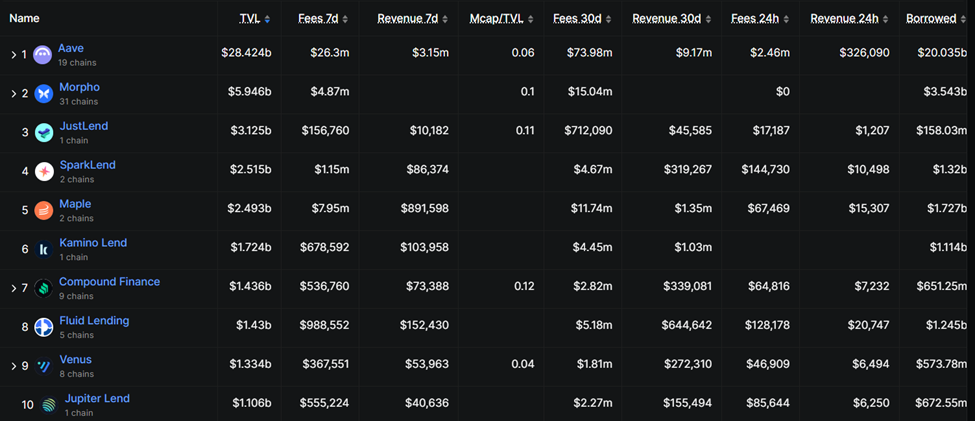
Even large ETH holders, such as Trend Research, who deleveraged by selling hundreds of millions of dollars in ETH to pay off Aave loans, relied on the protocol’s efficiency to mitigate further stress in the market.
Sponsored
The weekend drop highlights both the opportunities and vulnerabilities inherent in the Ethereum lending ecosystem.
While active lending and leverage are increasing, Aave’s resilience indicates that the DeFi infrastructure is maturing.
The protocol’s ability to absorb large-scale liquidations without systemic failures highlights Ethereum-based lending as a stabilizing force in volatile markets. It reinforces its “flight to quality” reputation among institutional and retail players.
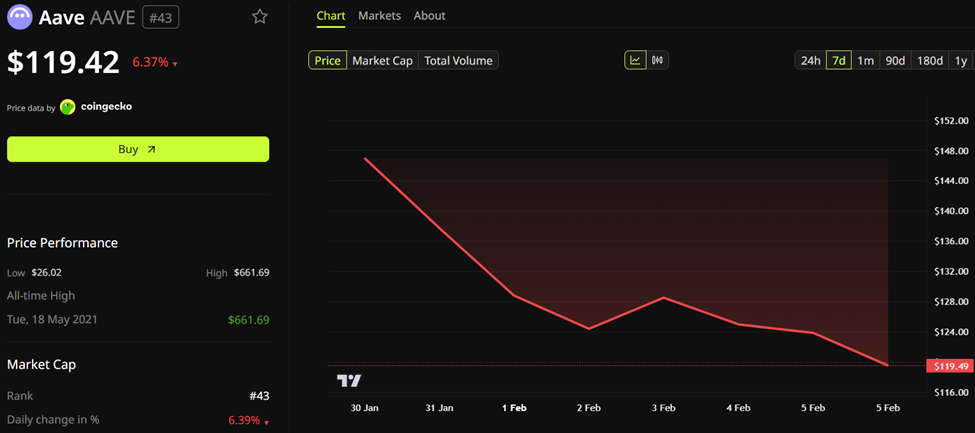
Despite this bullish outlook, the AAVE token is down more than 6% in the last 24 hours and was trading at $119.42 at the time of writing.