Altcoin market capitalization (TOTAL2) remained below $1 trillion in February, while market sentiment fell to its most extreme level in years. Many investors expect altcoins to bottom shortly after five consecutive months of decline.
The first quarter of 2026 may still offer opportunities. However, investors need objective signals to evaluate the bigger picture.
Sponsored
Sponsored
Persistent selling pressure and fragmented liquidity weigh on altcoins
A report from CryptoQuant claims that selling pressure on altcoins (excluding BTC and ETH) has reached its most extreme level in five years.
The accumulated buy/sell delta data has reached -209 billion dollars in the last 13 months. In January 2025, this delta was almost zero, reflecting a balance between supply and demand. Since then, it has continued to fall without reversing.
This extreme condition completely differs from the 2022 bear market. During 2022-2023, the selling pressure slowed, allowing the market to enter a sideways phase before recovering. That slowdown has not occurred in the current cycle.
“This is not a decline. This is 13 months of continuous net selling on the CEX spot. -209B does not mean bottom. It means buyers are gone,” said analyst IT Tech.
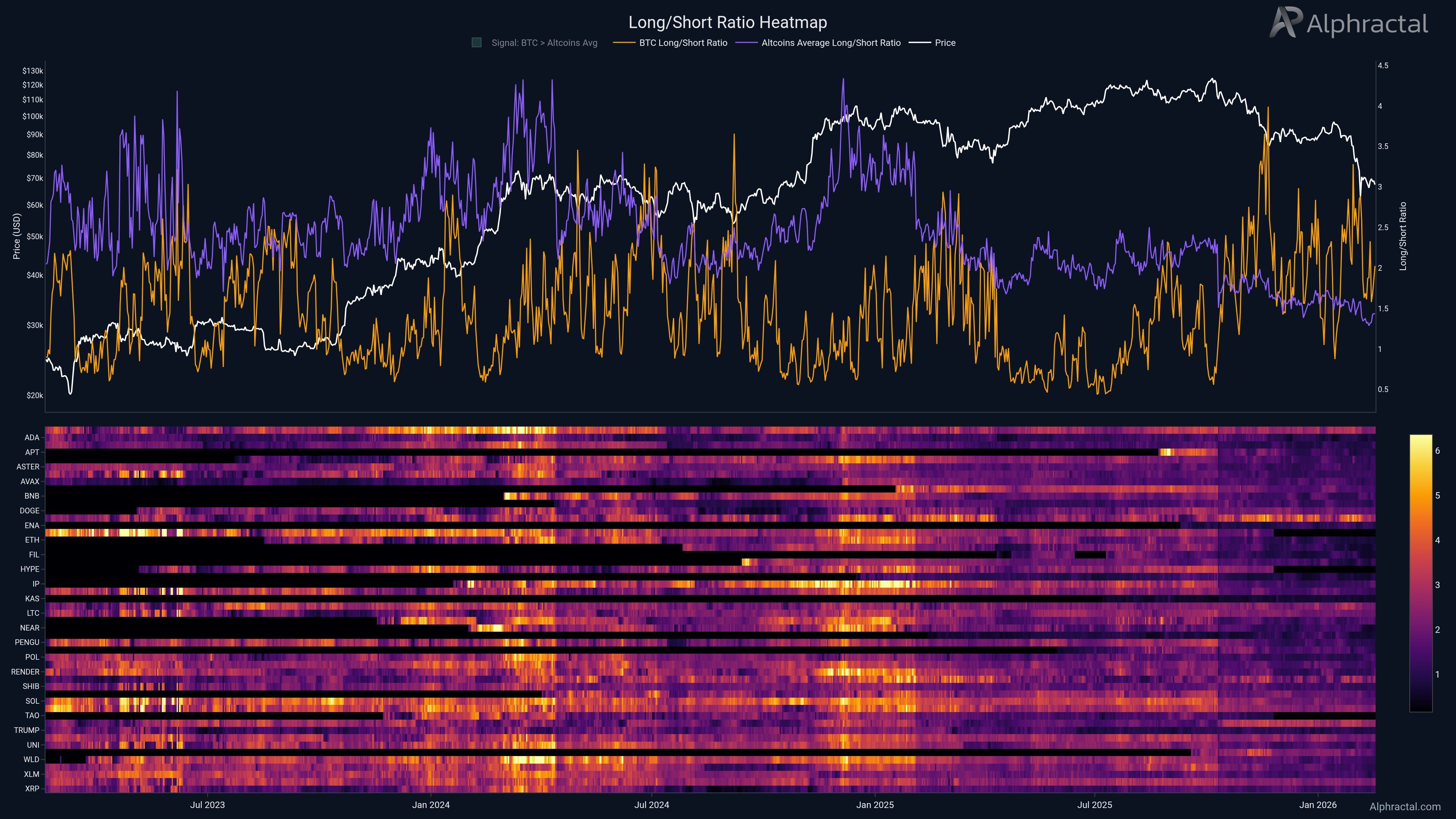
Additionally, derivatives data can provide additional short-term information. Currently, traders hold significantly more long positions in Bitcoin than altcoins, as reflected in Alphractal’s long/short ratio data.
Sponsored
Sponsored
The chart shows that this is the first time in history that Bitcoin’s long ratio has remained above the altcoin average for four consecutive months. This indicates that short-term traders have reduced their exposure to altcoins and that expectations for altcoin volatility have weakened.
Furthermore, the total altcoin market capitalization has fallen back to levels from five years ago, below $1 trillion. Altcoin analysis account OverDose noted that the biggest difference lies in the number of tokens. Five years ago, only about 430,000 coins were listed. Today, that number has risen to 31.8 million, a roughly 70-fold increase.
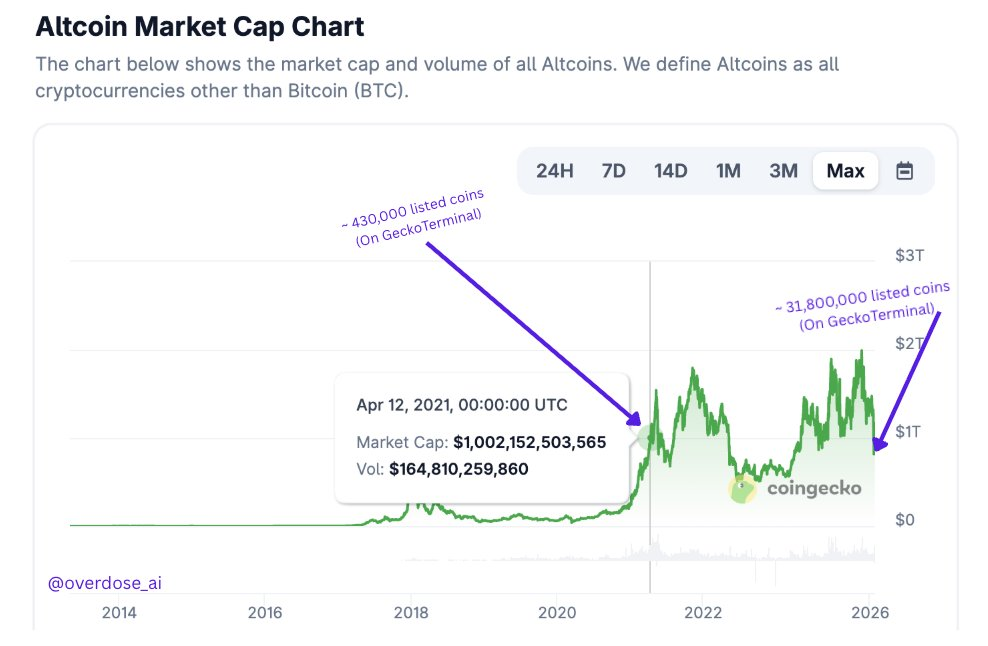
Too many tokens compete for a market “pie” that has not grown. This dynamic makes the recovery more fragile and threatens the survival of small-cap tokens.
Excluding the top 10, the remaining market capitalization stands at less than $200 billion. The technical structure shows a head and shoulders pattern, and this capitalization is moving towards its neckline support. Analyst Pentoshi commented that even if altcoins recover, the gains will likely not be substantial.
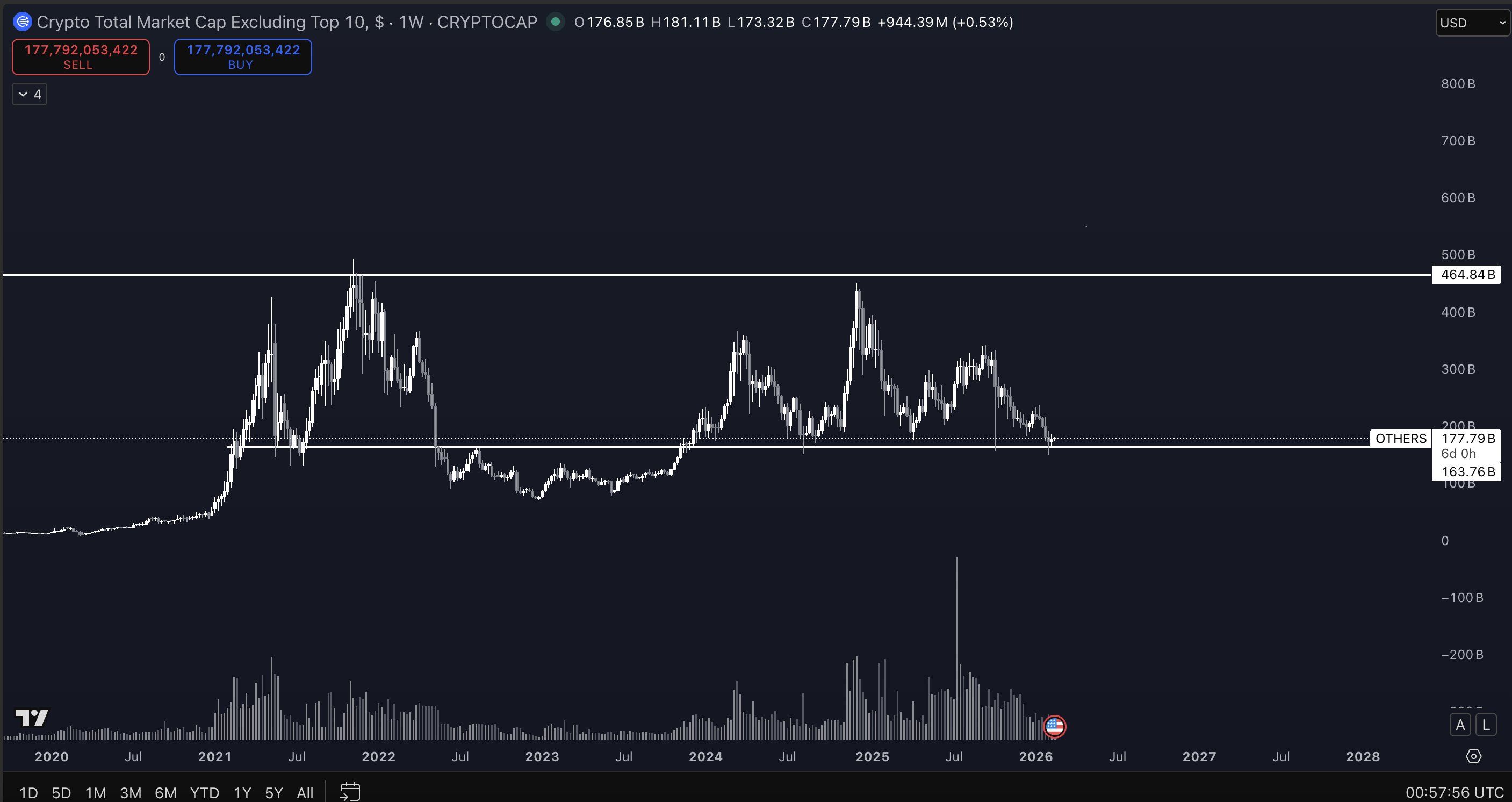
“Even if alts bounce here, it probably won’t be substantial. I think they will eventually hit new lows… In my opinion, it will take some time to break through,” analyst Pentoshi predicted.
According to CoinGecko research, 53.2% of all cryptocurrencies listed on GeckoTerminal had failed by the end of 2025. In 2025 alone, 11.6 million tokens collapsed.
The current bear market may permanently change the way investors allocate capital within the altcoin sector. Market participants can become more selective, prioritize liquidity and fundamentals and reduce exposure to small-cap speculative assets.