Bitcoin price has retreated, but the larger structure has not been broken. After the first peak of 2026 on January 14, BTC corrected almost 6%, briefly falling towards the $92,000 area. Since then, the BTC price has stabilized, although it is still showing a drop of approximately 2.6% in the last 24 hours.
At first glance, the measure seems weak. But if we take a step back, both the chart structure and the on-chain data suggest that this drop may be controlled profit booking rather than the beginning of a deeper collapse. The key question now is simple: is this just a pause, or is Bitcoin preparing for its next bullish move?
Cup and handle structure keeps bullish bias alive
On the daily chart, Bitcoin is still trading within the cup and handle pattern. This is important because the handle is formed above a rising neckline. An ascending level shows that buyers are stepping in at higher levels, which generally increases the chances of a successful breakout if resistance is removed.
Sponsored
Sponsored
Do you want more information about tokens like this? Subscribe to editor Harsh Notariya’s daily cryptocurrency newsletter here.
Another sign of support comes from momentum. Between November 4 and January 19, Bitcoin price is making a lower low, but the Relative Strength Index, or RSI, is forming a higher low. The RSI measures momentum by comparing recent gains to recent losses. When the price falls but the RSI improves, it indicates that the selling pressure is weakening.
All-in-one crypto ecosystem analysis team B2BINPAY, in an exclusive comment to BeInCrypto, said the price action suggests patience rather than exhaustion.
“What we see with Bitcoin is that it is gradually breaking out of the long flat phase that began in mid-November 2025. There is no strong burst of activity on the chart, and that usually means a pause before the market makes another attempt to test the $100,000 level,” they mentioned.
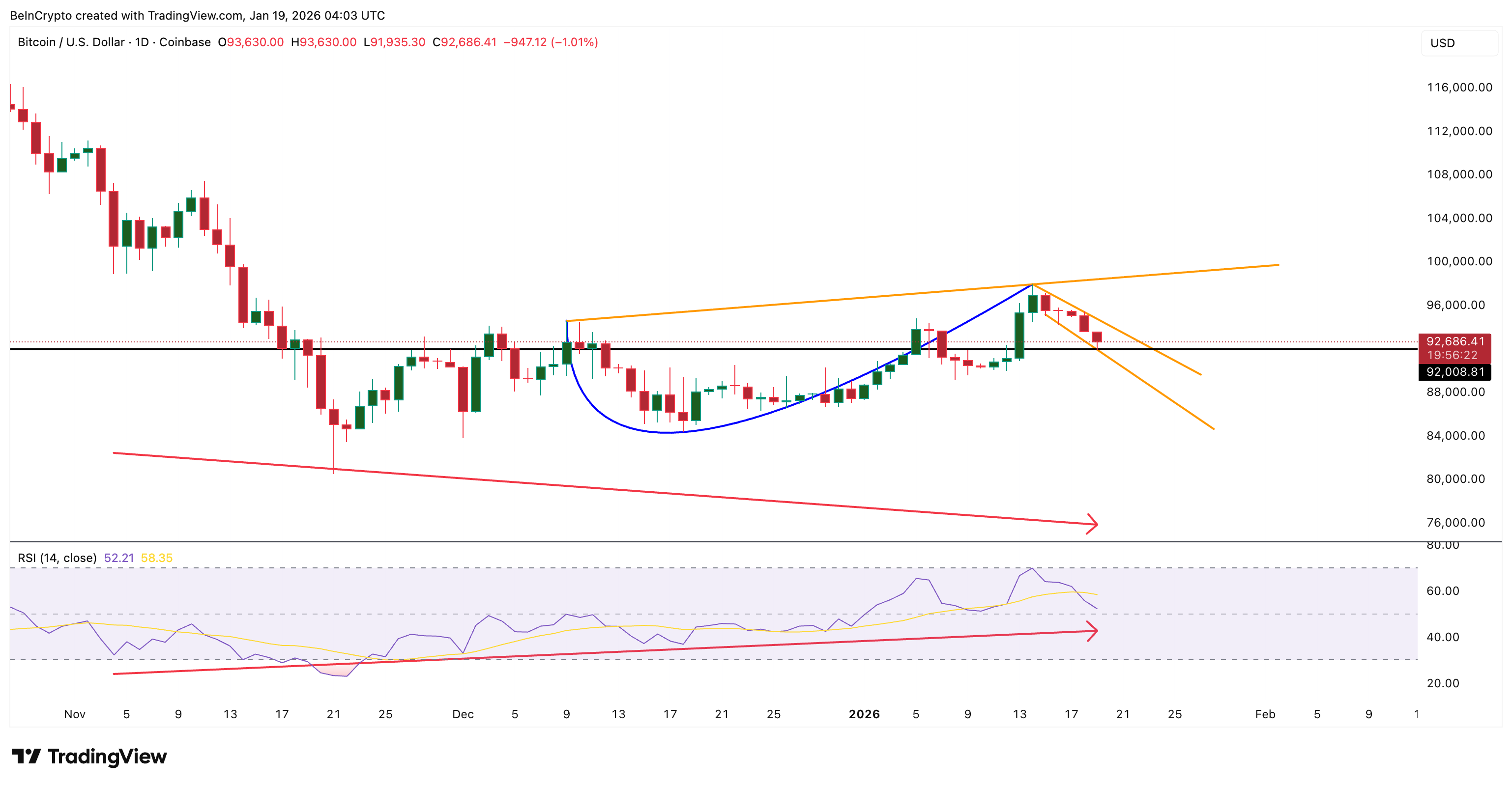
This bullish divergence suggests that the broader three-month downtrend, during which Bitcoin is still down around 15%, may be losing steam. The divergence would be confirmed if Bitcoin stays above $92,000 and starts rising again. As long as the price remains within the level, the bullish structure will remain intact.
So if the chart still looks constructive, why did Bitcoin fall in the first place?
Sponsored
Sponsored
Profit booking by long-term holders explains the fall
The answer is in chain. The latest pullback aligns closely with profit booking by long-term holders, not panic selling.
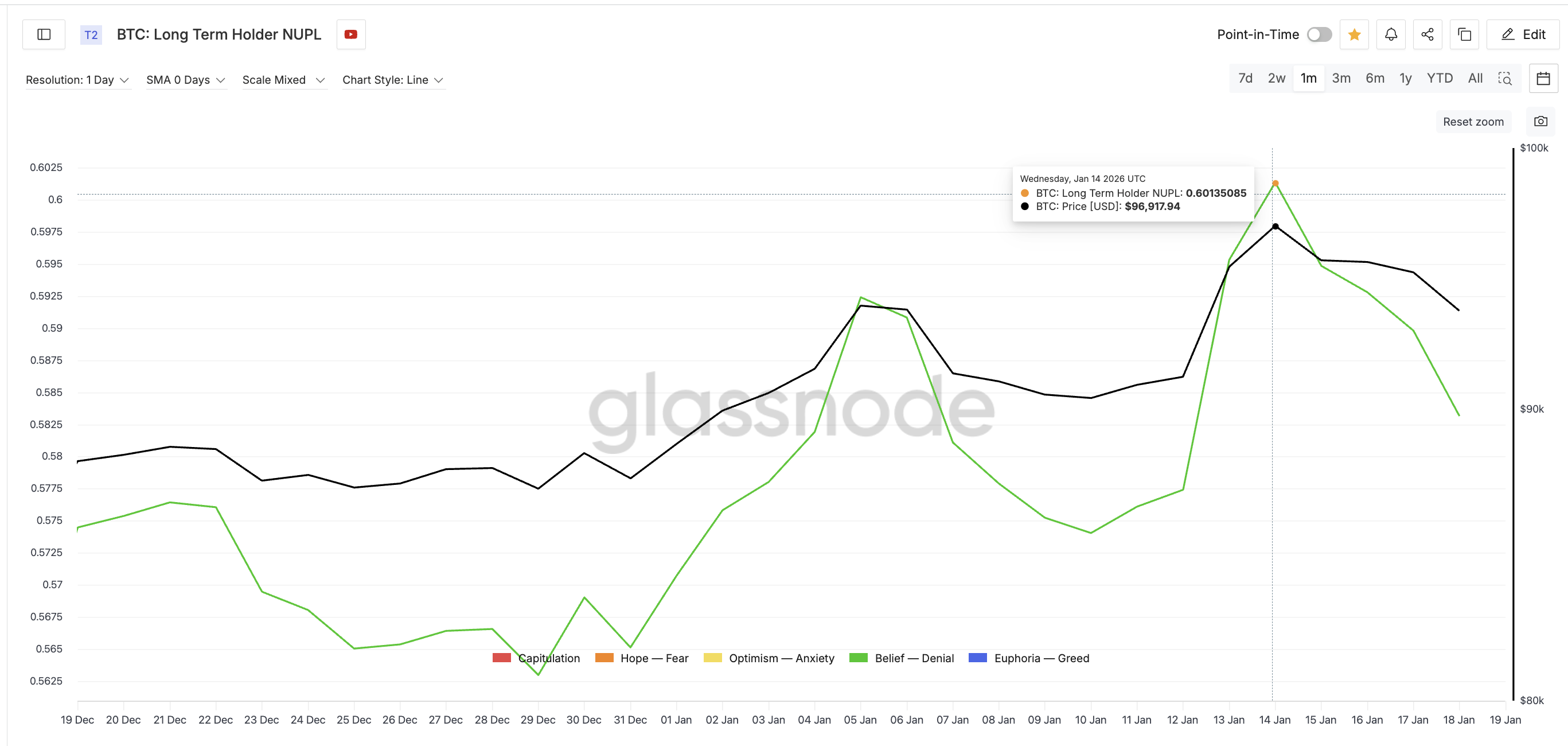
The long-term holder NUPL, which stands for Net Unrealized Profit/Loss, fell from around 0.60 to 0.58 during the decline. NUPL measures how much unrealized gains holders have. A drop means profits are being made. This was one of the steepest NUPL pullbacks in the monthly period, similar to the drop seen between January 5 and 10.
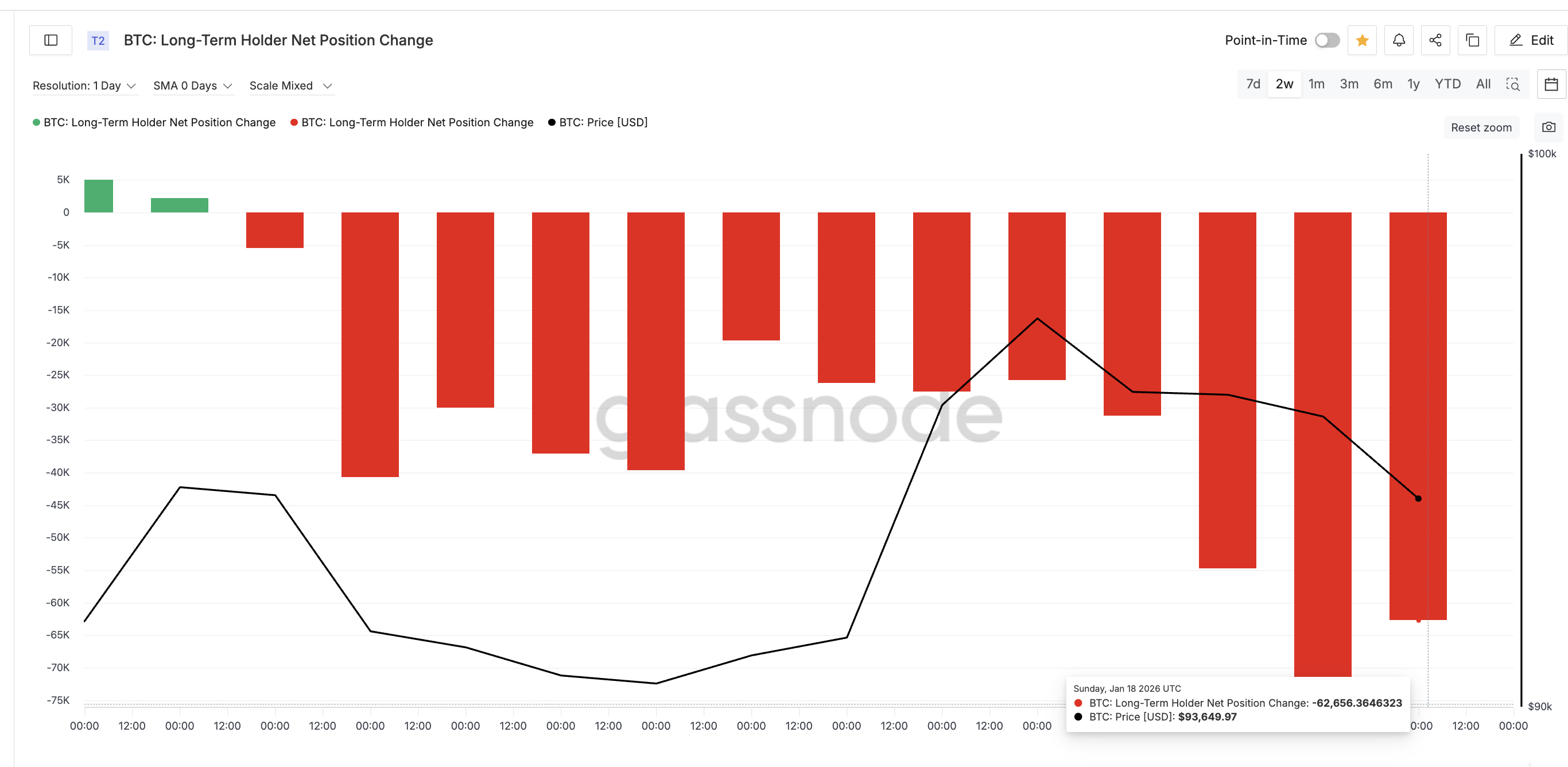
This is confirmed by the change in the net position of long-term holders. This metric tracks whether holders with coins possibly older than 365 days are accumulating or selling. On January 14, long-term holders sold approximately 25,738 BTC. By January 18, that figure had expanded to approximately 62,656 BTC. This represents an increase of approximately 150% in selling pressure in just a few days.
Despite increasing pressure to post profits, analysts note that demand-side performance has not weakened significantly. According to the B2BINPAY analysis team, the broader market positioning still shows steady accumulation beneath the surface.
Sponsored
Sponsored
“Buyers are present, but they are in no hurry. Meanwhile, large holders continue to accumulate. On January 13, BTC ETFs recorded almost $900 million in inflows, the strongest day since October 7. That was also the day Bitcoin rose almost 8%,” they highlighted.
That selling explains why Bitcoin rallies have struggled to sustain recently. When conviction holders sell, the upside is limited even if the chart looks healthy.
But not everything is negative.
While long-term holders were selling, another group was quietly doing the opposite.
Whales Continue to Accumulate as Key Bitcoin Price Levels Highlight
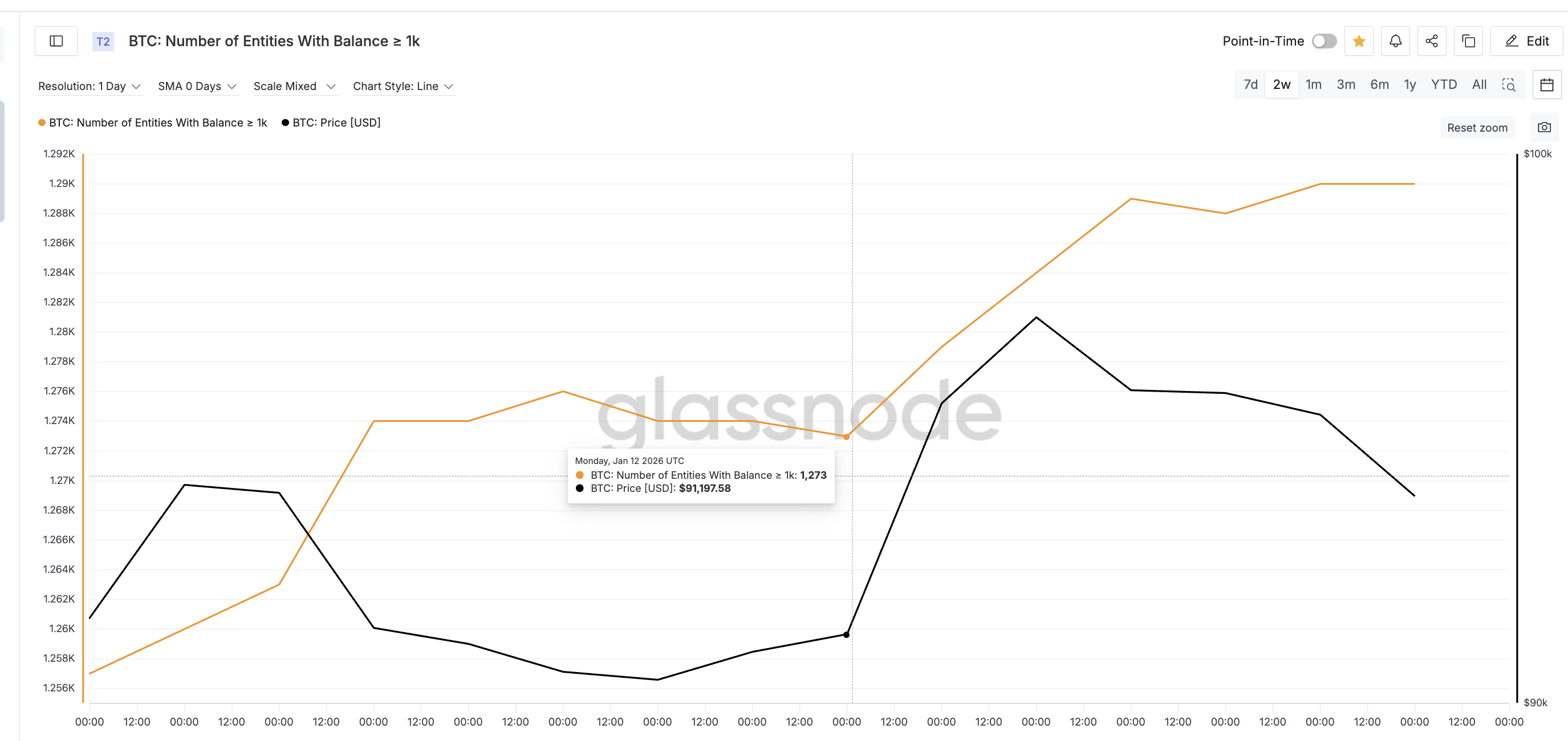
Entities holding more than 1,000 BTC have continued to accumulate. Since January 12, the number of such entities has increased from approximately 1,273 to approximately 1,290. This is a small increase, but more importantly, it occurred before the crash and continued during it.
Sponsored
Sponsored
This shows that the whales were not sold until they became weak. Their accumulation helps absorb some of the supply, even as long-term holders make profits.
From a price perspective, Bitcoin is now at a decision point. To regain strength, the price needs to recover $95,200, which would indicate a breakout of the level. Above that, $98,800 becomes the next important level. Clearing it would open the way to the pattern’s projection near $111,800, about 13% higher than the cup’s dynamic neckline.
The B2BINPAY team noted similar BTC levels while speaking to BeInCrypto:
“Overall, the structure favors continuation. As long as Bitcoin is above the $94,000 to $95,000 area, a move to $100,000-$105,000 is realistic within weeks, potentially reaching the $120,000 to $140,000 range later in 2026 if demand holds. A failure would likely mean a pullback to 88,000-90,000 dollars, where liquidity is already concentrated,” they mentioned.
On the downside, the structure weakens if Bitcoin closes below $92,000. A deeper break below $89,200 would invalidate the pattern completely.
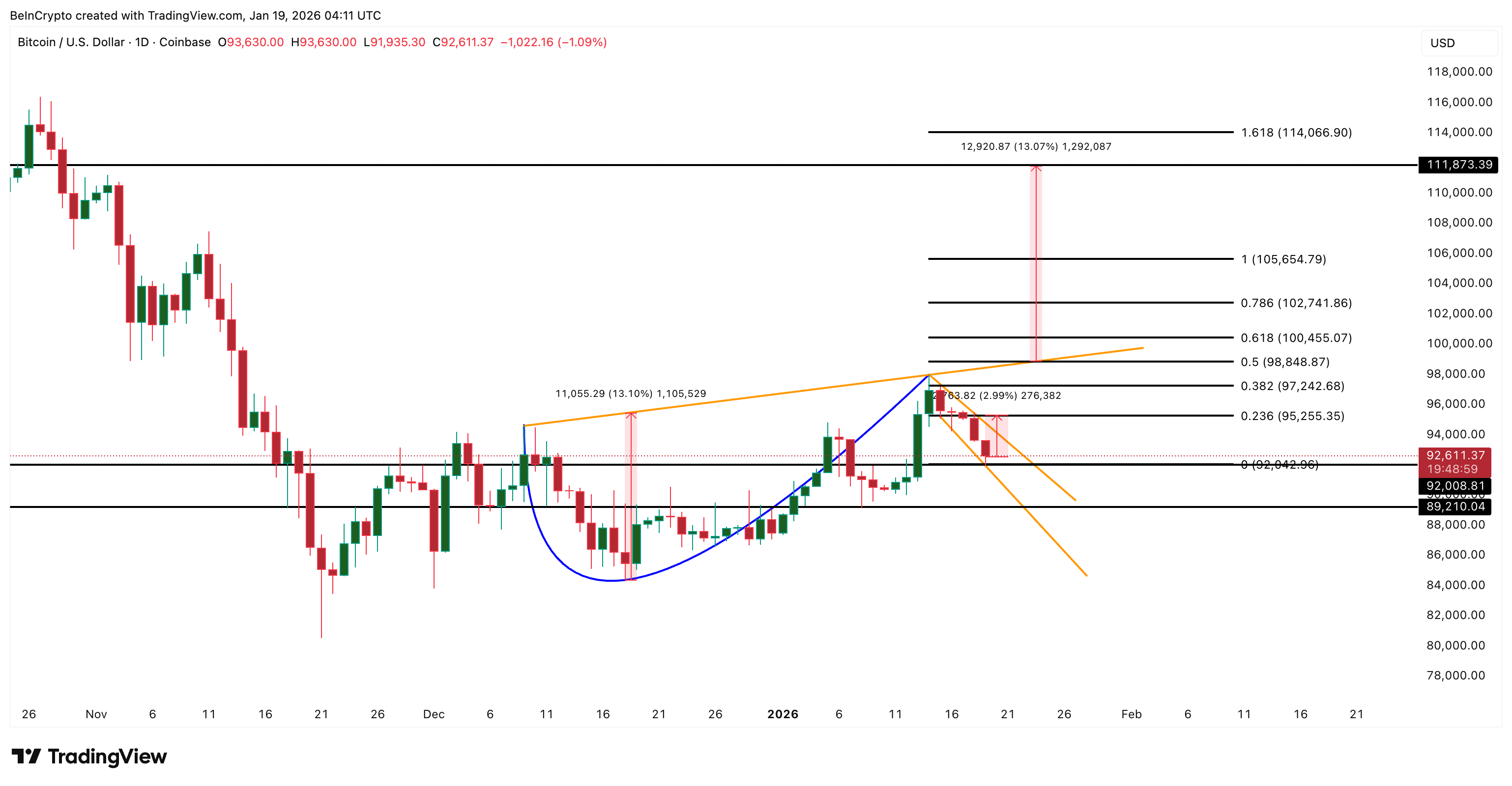
The recent decline was driven by profit booking, not fear. The structure remains bullish. The whales continue to add. But for the breakout to ultimately hold, long-term holders must stop selling and start buying again. Until that happens, Bitcoin’s 13% breakout hope is still alive, but not guaranteed.