The institutional adoption of digital assets is accelerating in Asia-Pacific. The 2025 Crypto Global Crypto Adoption Index shows the leading global APAC growth, and the value received an increase of 69% year after year to $ 2.36 billion. India heads the index, while Japan, Korea and Southeast Asia expand pilots and sandboxes.
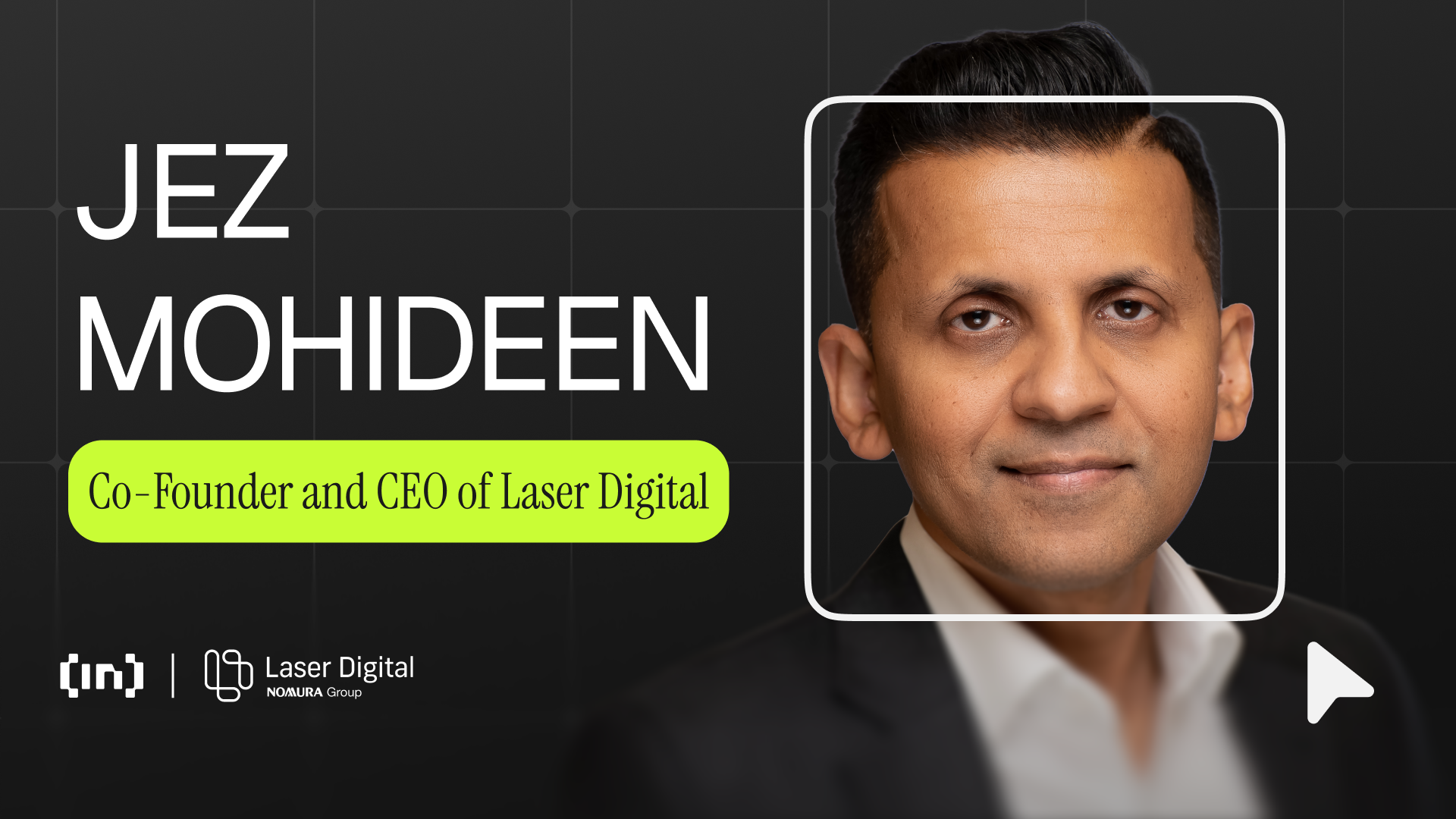
In this context, Beinypto spoke with Dr. Jez Mohideen, co -founder and Digital Laser CEO, the Nomura Group digital asset arm, to discuss where the adoption of web3 is more active.
The true concerns of institutional investors
Despite the growing basic adoption, many joint rooms still judge it “too soon.” Then, What cite institutions in internal discussions by weighing cryptographic adoption? Mohideen’s response highlighted the obstacles of reputation, security and compliance that dominate the agenda.
Sponsored
Sponsored
“In all APAC, the institutional interest in digital assets continues to grow. However, adoption is addressed with caution, possibly due to persistent concerns about the risk of reputation, cyber security threats (for example, financial losses of piracy incidents) and compliance with global standards such as Basel III, FATF, FATF, AML and CFT.”
These concerns are still urgent. Beinypto reported that the alleged North Korean hackers stole $ 1.6 billion in the first half of 2025, including $ 1.5 billion bybit alone. Such losses explain why institutions demand custody, insurance and audit clarity before advancing.
Industry response levels
What APAC industries are leading the position? Banks and Securities companies have announced pilots, while insurers remain cautious. Mohideen said the gap reflects not only regulation but also the internal strategy.
“While it is difficult to generalize by the industry, the responses vary significantly according to the strategy of the individual company. Insurance companies tend to be more conservative and slower to interact with digital assets. Other sectors, including banking and values companies, tend to show a more proactive exploration, often through pilot programs or strategic associations.”
Four -year cycle and market prospects
Bitcoin has been framed for a long time by its four -year cycle driven by half. But in 2024, the cycle broke a precedent: Bitcoin increased to a new historical maximum before half, driven by institutional accumulation instead of retail speculation.
Sponsored
Sponsored
Analysts say that this change reflects Bitcoin’s evolution in a macro asset linked to global liquidity, reducing the role of half of half as a decisive signal. Do institutions still pay attention to the cycle?
“Institutional investors generally see the cycle of half Bitcoin as one of the many market indicators. The broader regulatory developments and changes in structural demand are increasingly influential. Half can contribute to feeling, but it is not a decisive factor in institutional decision making.”
These observations are aligned with the changing structure of the flows. Farside investors data show that the US Bitcoin ETFs attacked $ 54.5 billion since January 2024, while Bloomberg pointed out billions in ETF Ether tickets in 2025. Together, Bitcoin and Ethereum now anchor the institutional reference points together with the macro indicators.
Bitcoin Treasury Strategies and Early Examples
The adoption of the treasure has been promoted as a sign of institutional conviction, with companies such as Metaplanet and Remixpoint in Japan adding Bitcoin. However, cracks are visible. Beinypto reported that many treasure companies now marketed below their MNAV, limiting their ability to raise funds and expose them to forced sales. Some analysts call the strategy “the greatest financial arbitration in history”, while others warn that it resembles a bet similar to Ponzi. How early began to shape adopters the discussion?
“In Japan, regulatory discussions on cryptographic taxes and accounting are advancing. Some companies have adopted cryptographic treasury strategies, which are being closely monitored. These first adopters serve as studies of practical cases in risk management. Its success or failure can influence the broader institutional behavior, but adoption will depend on regulatory clarity and operational preparation.”
Sponsored
Sponsored
Beyond Japan, Yunfeng Financial of Hong Kong allocated $ 44 million in ETH, while China Renaissance pledged to $ 200 million to Web3, including $ 100 million in BNB, which won the nickname “BNB Microstrategy”. These companies remain case studies on how treasure bonds adapt amid market stress.
Tokenization and liquidity integration
Tokenization is accelerated worldwide. The Singapore Guardian project has expanded to Bonds and FX, Hong Kong issued multiple digital bonds, and Japan continues to refine the Marcos Sto. How can these developments converge with cryptographic liquidity? Who will take the lead?
“The tokenization of traditional assets (actions, bonds) is progressing, but integration with the liquidity of the cryptocurrency remains complex. Regulatory restrictions in the issuance of the public chain can delay convergence. Banks and exchanges bring confidence, but the real opportunity lies in collaboration with the new infrastructure players that the markets regulated with the innovation of the public chain. This convergence and convergence of convergence and the reduction of collaboration with the new infrastructure players that can close the regulated markets with the innovation of the public chain.
Stablecoins proliferation and interoperability
The Stablecoin frames are proliferating through APAC. Japan classified JPYC as an electronic payment instrument, the Hong Kong ordinance established the capital requirements of HK $ 25 million, and South Korea floated a block chain backed by the State. Can interoperability be achieved in the midst of divergent rules?
“The emergence of such stable can increase to the general dynamics, but it is likely that any form of competence of commercial factors arises instead of political factors. The competition will probably arise depending on the general convenience, the UX and the real costs to use them (that is, the implementation costs). Regulators and emitters entertain the unpleasant lands, and given the critical importance of the critical importance of the functions of settlement, The expansion.
The global connection and interoperability are the expected characteristics from the beginning. Each jurisdiction wants control, each issuer wants stickiness. That creates the risk of isolated liquidity. It is likely that initial operations are carried out with limited functionality and reduced versatility. “
Sponsored
Sponsored
APAC market reality
While Hong Kong and Singapore lead public messages, Mohideen said the activity is spreading more widely. Where is that capital, talent and adoption of web3 (defi, dexs, NFTS) are really active?
“While Hong Kong and Singapore are publicly prominent, real activity is also emerging in Japan, Korea and Southeast Asia. Sandbox initiatives and pilot programs are gaining ground. In Japan, interest in Defi and Dexs is growing among cryptographic users. In their place.”
The trend of the family office illustrates this. UBS and Reuters pointed out that Asian rich families now assign from 3% to 5% to cryptography, treating it as an essential part of their portfolio. Combined with the basic adoption, these flows show that web3 is no longer in the Apac niche.
Risk landscape
Our last question was about how institutions balance the opportunity with risk. The previous points of Mohideen on safety and governance resonate as the law of regulators against washing tools and leverage treasury models face tension.
The doj condemnation for Tornado co -founder Cash Roman Storm stressed the compliance priorities. Analysts warn that debt treasure bonds face an expiration wall of $ 12.8 billion by 2028. APAC institutions are responding with transparency approaches and capital financing, such as Beinypto reported on the adoption of the treasure.
Mohideen’s perspective highlights caution and impulse in APAC. Institutions still weigh the risks, but the tokenization pilots, the Stablecoin rules and the treasury experiments point to rapid maturation markets. With Bitcoin and Ethereum as reference points and propagation of the adoption of web3, APAC feels the basis to shape the next phase of global digital finances.